iOS & Android
SkanCare App
My Role
UX Lead - Interaction Design, Visual Design, User Flows, Prototyping
Project Duration
Sept 2022 - Feb 2023
Overview
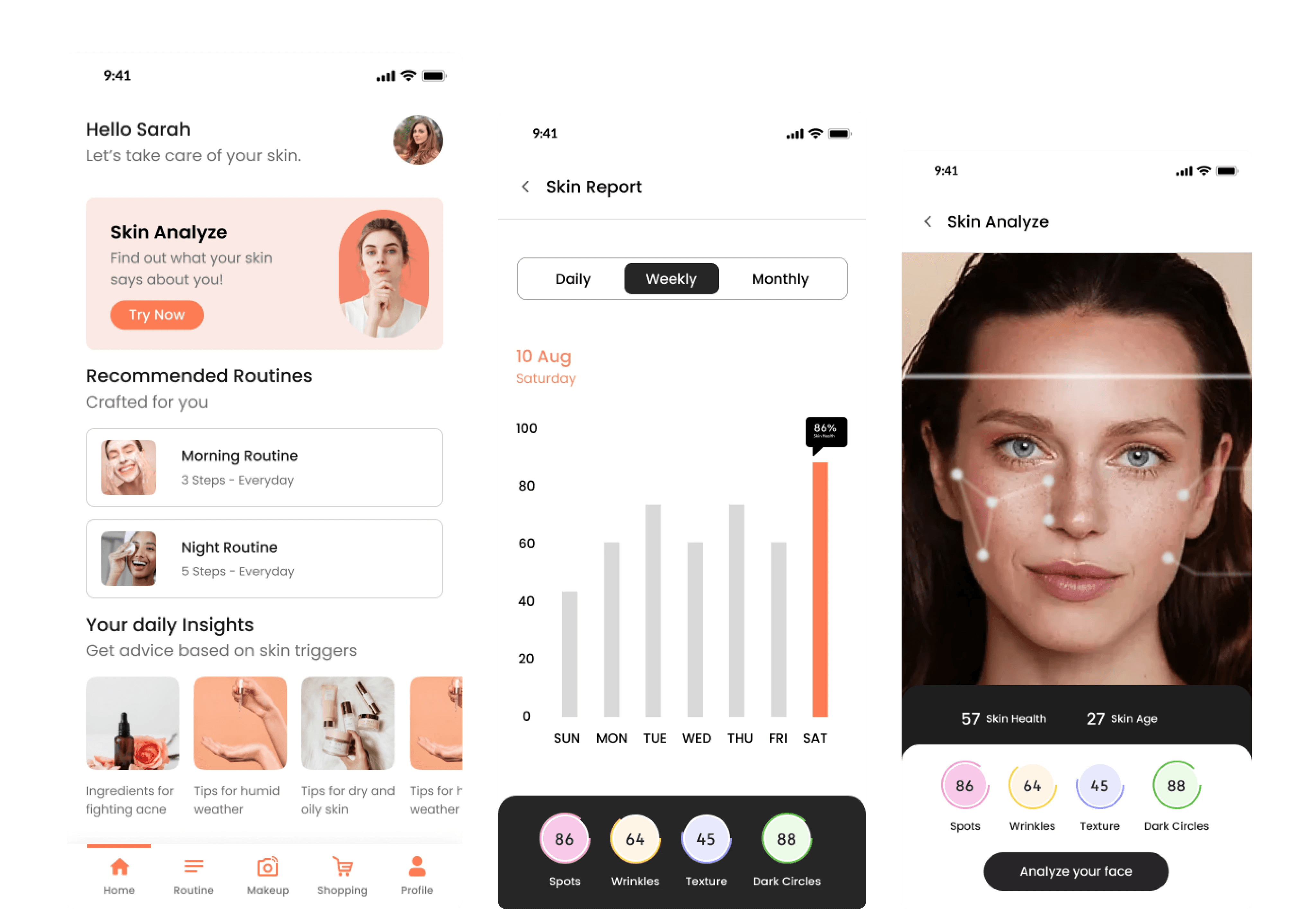
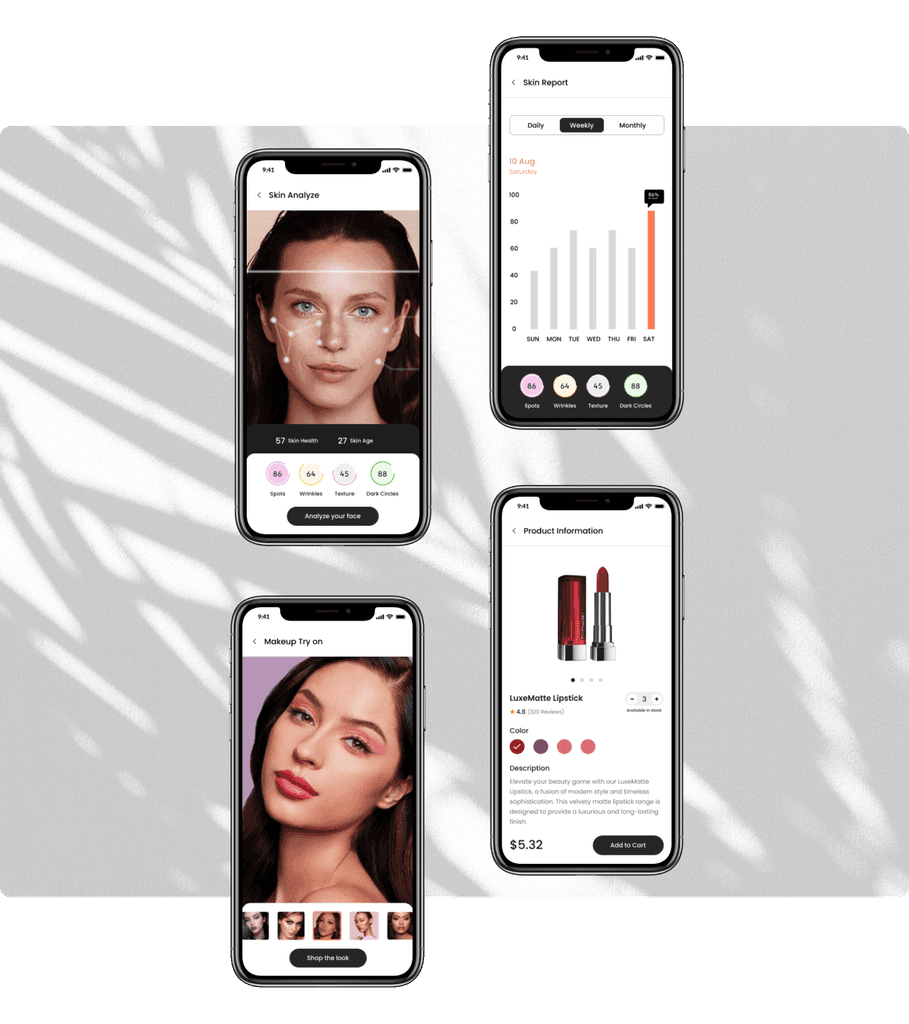
SkanCare is a revolutionary application that redefines the skincare experience for individuals passionate about skincare and beauty. It offers personalized skincare routines, trustworthy product recommendations, and a seamless shopping experience.
The Consumer Dilemma
In the world of skincare and makeup, a growing issue had emerged.
The struggle to find products that truly addressed specific skin concerns, coupled with the overwhelming influx of often contradictory information, had become a major source of frustration.
Furthermore, misleading marketing and opaque ingredient lists left consumers feeling uncertain about their beauty product choices.
Add to this the inefficient, time-consuming nature of skincare and makeup shopping, and the scope of the problem became evident.
Understanding the User
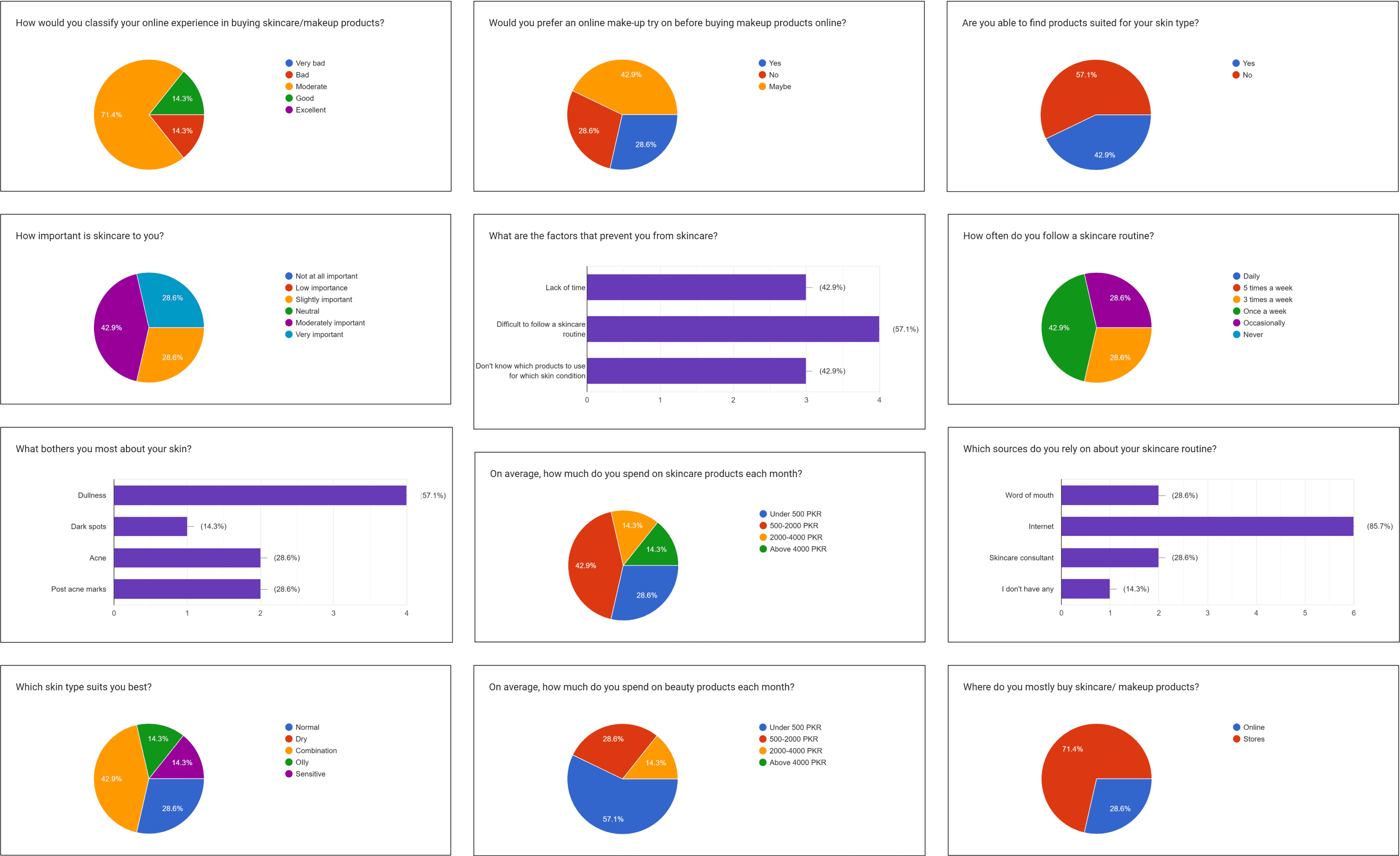
An in-Depth research was conducted to understand user behavior, goals, and pain points. Following two methods were utilized considering the time constraints:
Surveys
Provided quantitative feedback from a large sample of our target audience, enabling data-driven analysis.
Interviews
Offered qualitative feedback, allowing us to ask open-ended questions to gain deeper insights into user behavior and needs.
Key Findings:
Users prioritize natural and sustainable skincare for sensitive skin.
In-store advice and friend recommendations are trusted for product discovery.
Makeup shade selection is challenging for some users.
Online shopping concerns include product authenticity and quality.
Overall, users expressed a strong interest in a skincare app offering personalized routines, budget-friendly options, local alternatives, in-app purchases, and skin analysis.
Pain Points
Lack of Trust
Users expressed concerns about trusting skincare and makeup products due to adverse reactions and counterfeit items.
Inefficient Shopping
Users struggled to find genuine products and local alternatives, leading to a time consuming shopping experience.
Information Overload
Users felt overwhelmed by the abundance of skincare information online.
Product Selection Difficulty
Users found it challenging to find products suitable for their specific skin concerns.
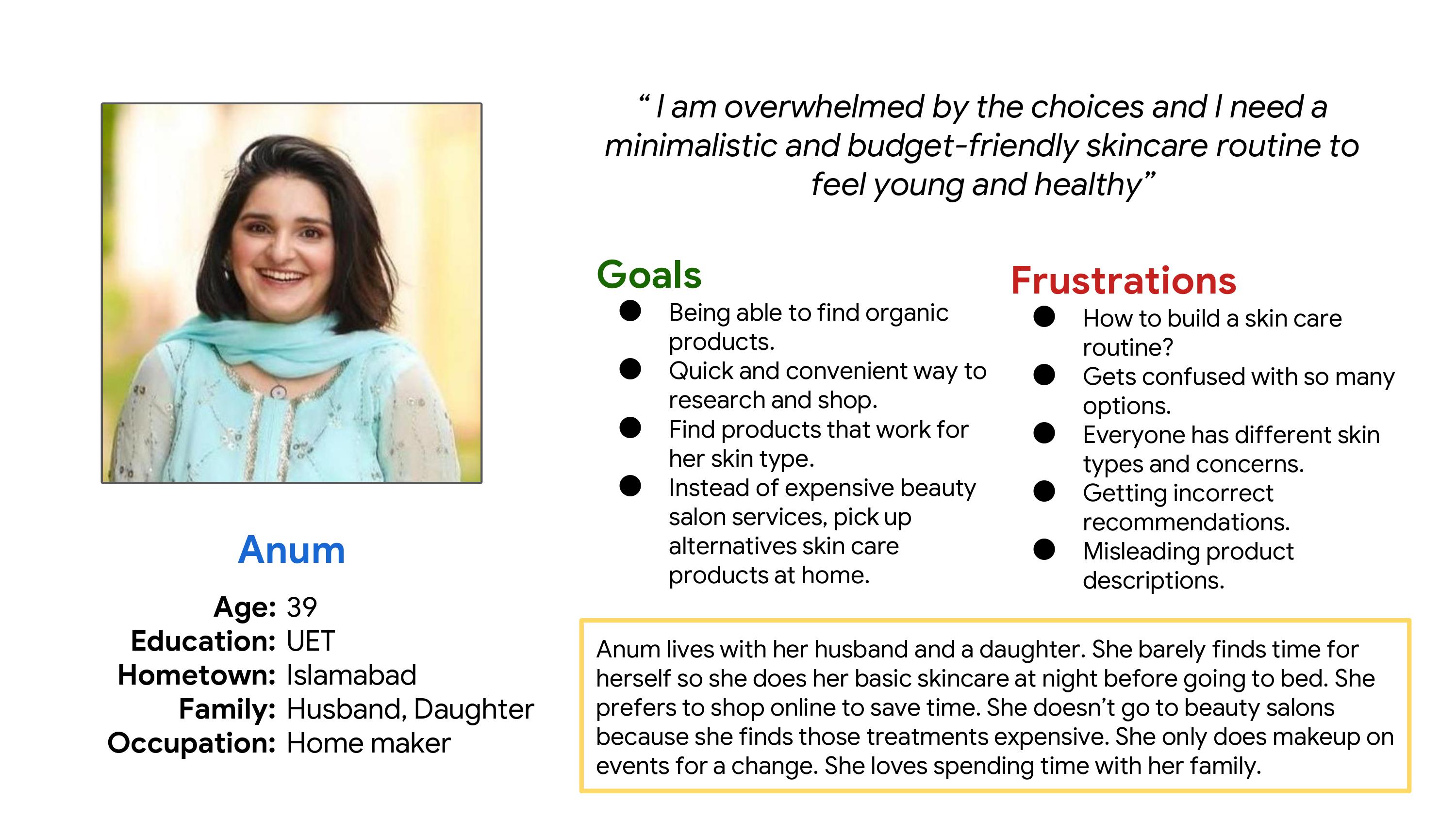
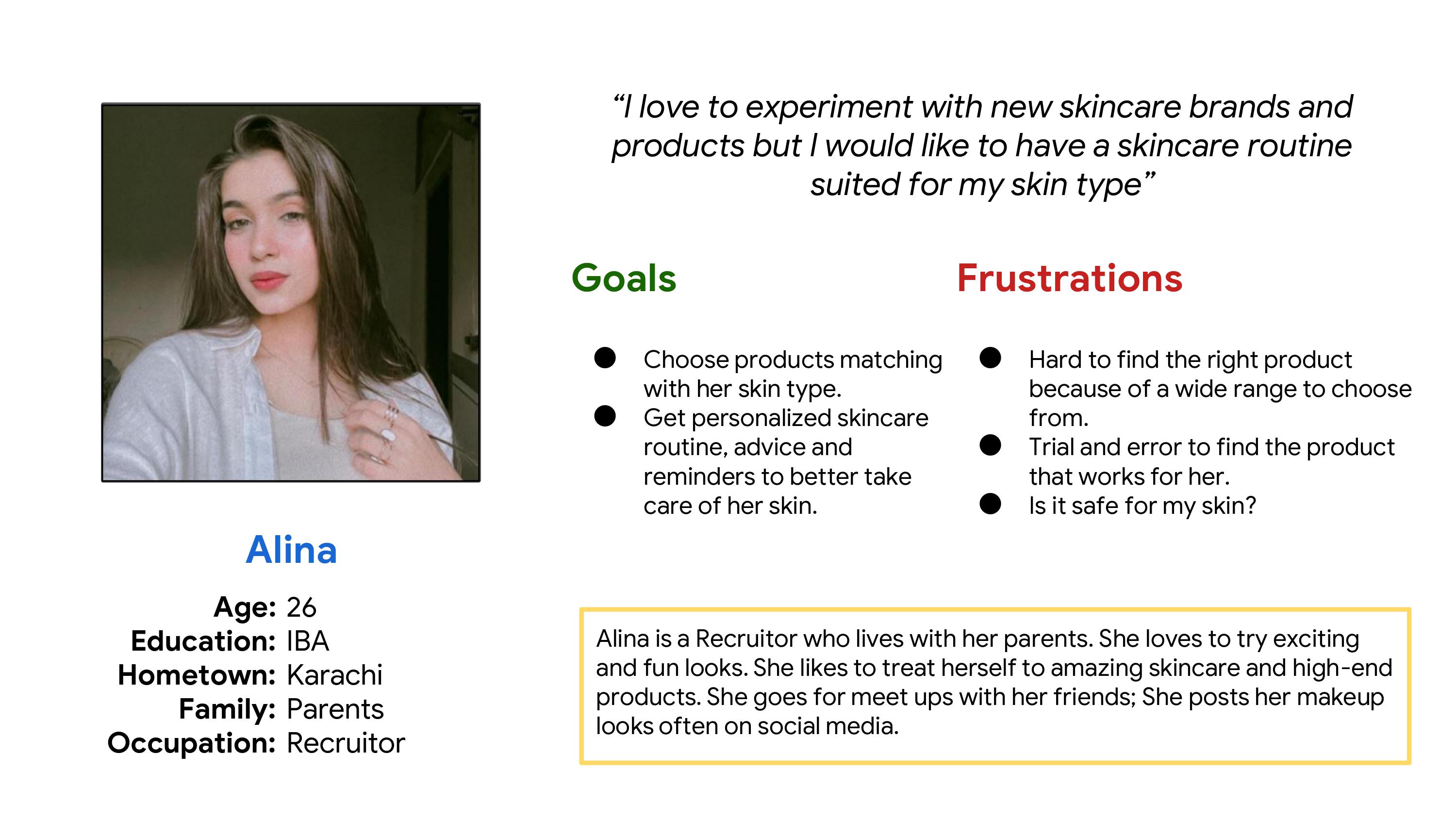
Personas
By creating user personas informed by extensive research, I honed in on key user needs, guiding our design process to deliver a simple and intuitive experience tailored to our audience.
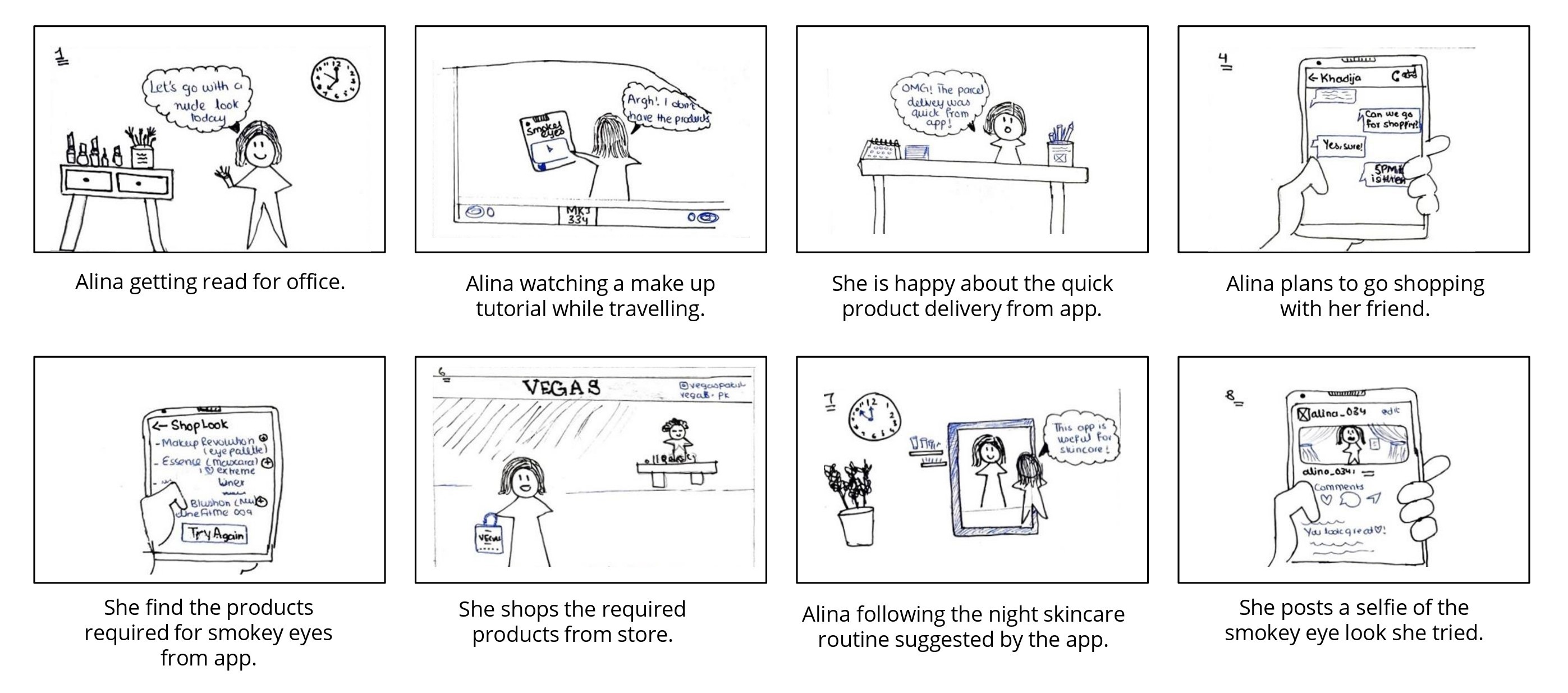
Storyboarding
Storyboarding provided a visual narrative, mapping out the user journey in simple frames. This visual roadmap became instrumental in shaping our UX design decisions, ensuring a seamless and user-friendly experience throughout.
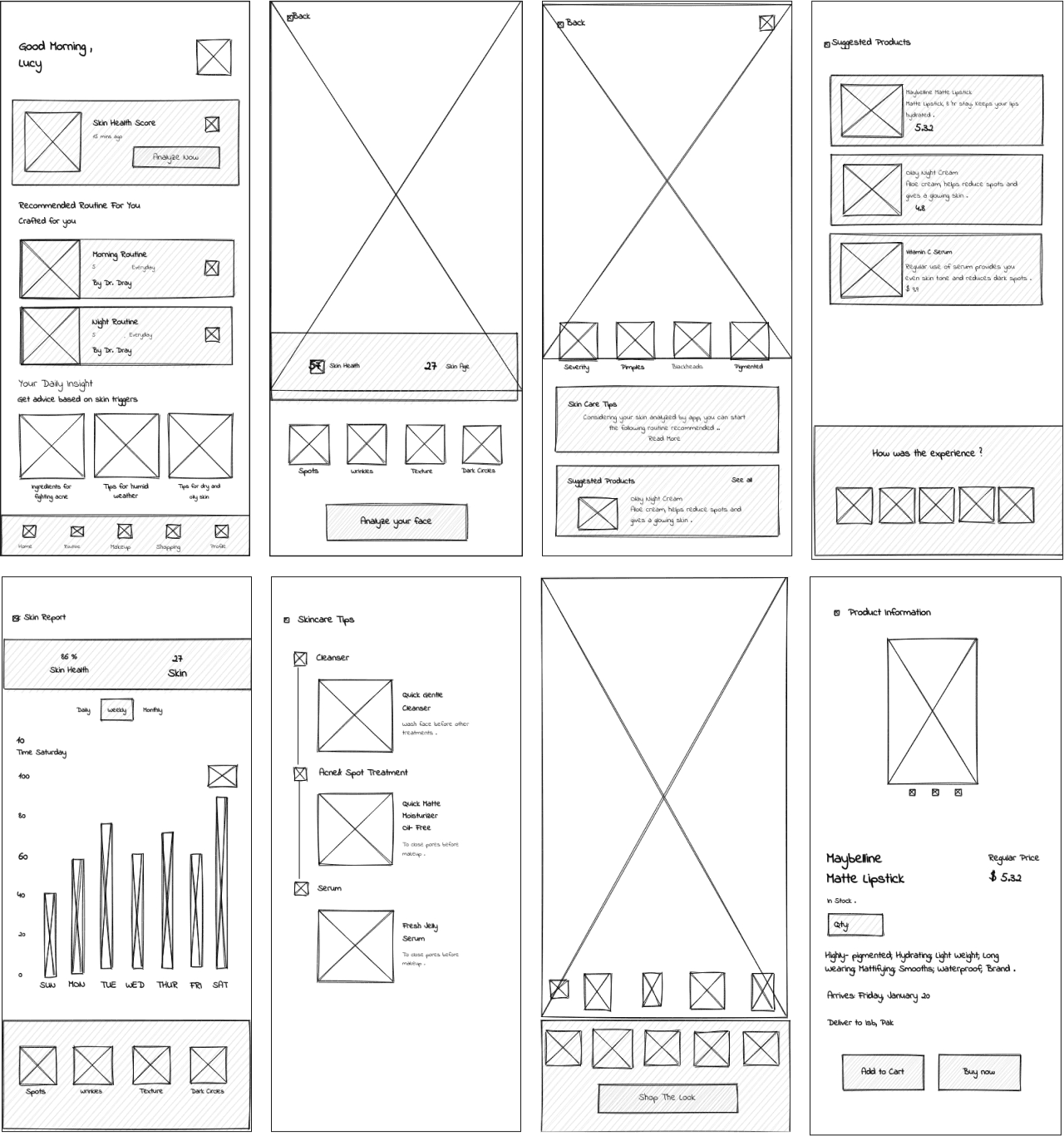
Wireframing
Wireframing translated the conceptual ideas into tangible structures, laying the foundation for the user interface. These skeletal representations helped define the layout and functionality, guiding the design process toward a clear and intuitive user experience.
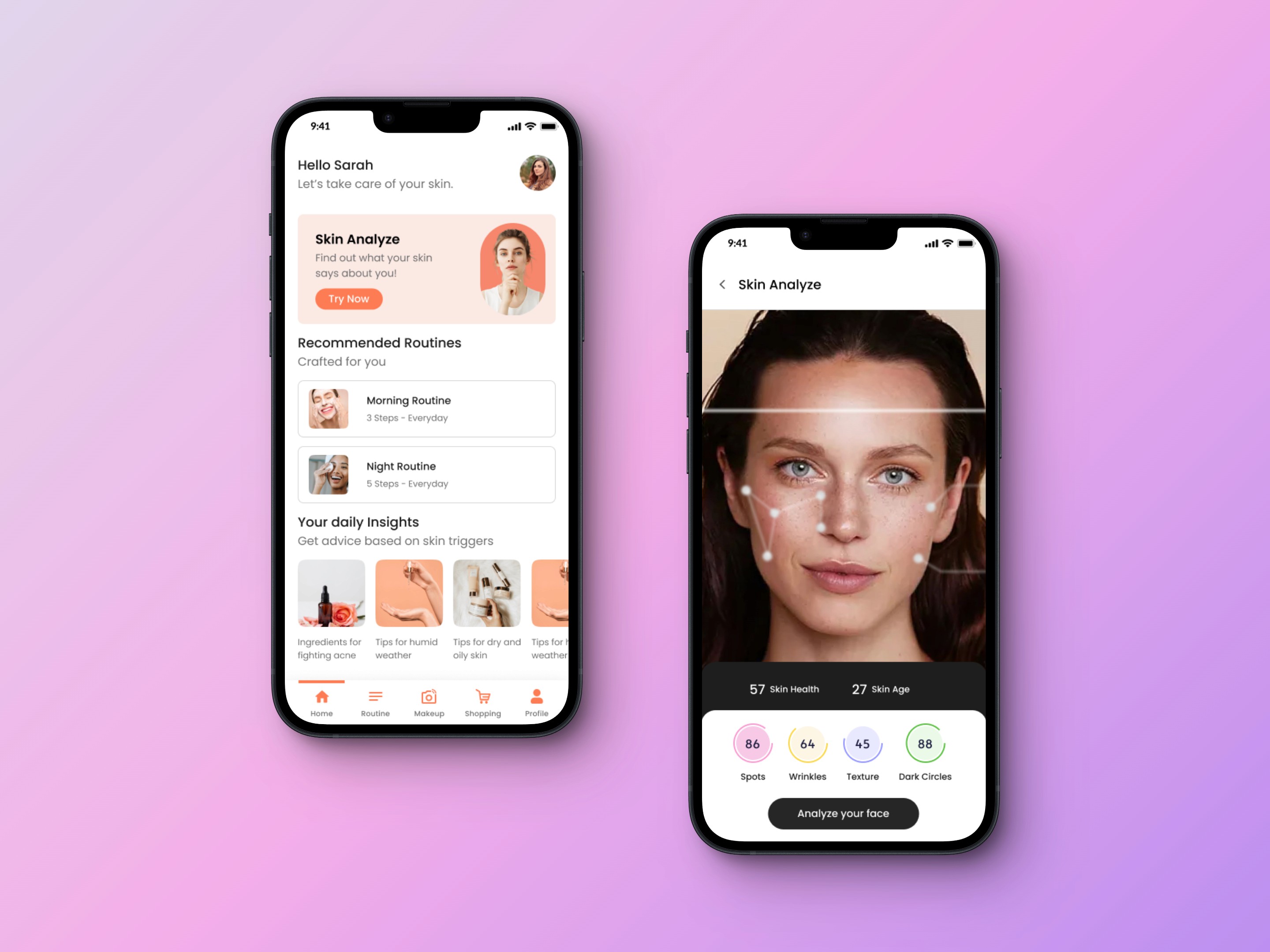
High Fidelity
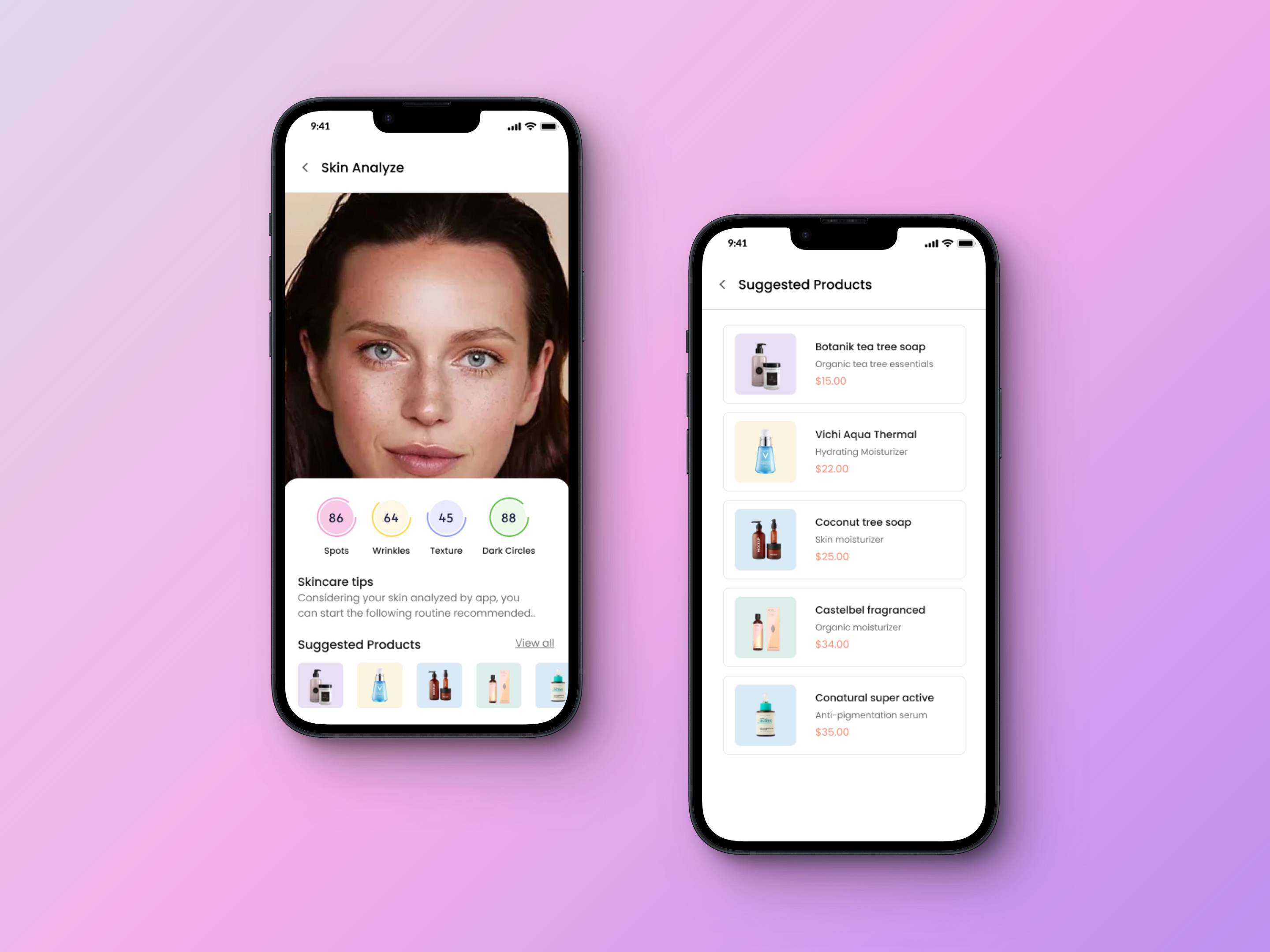
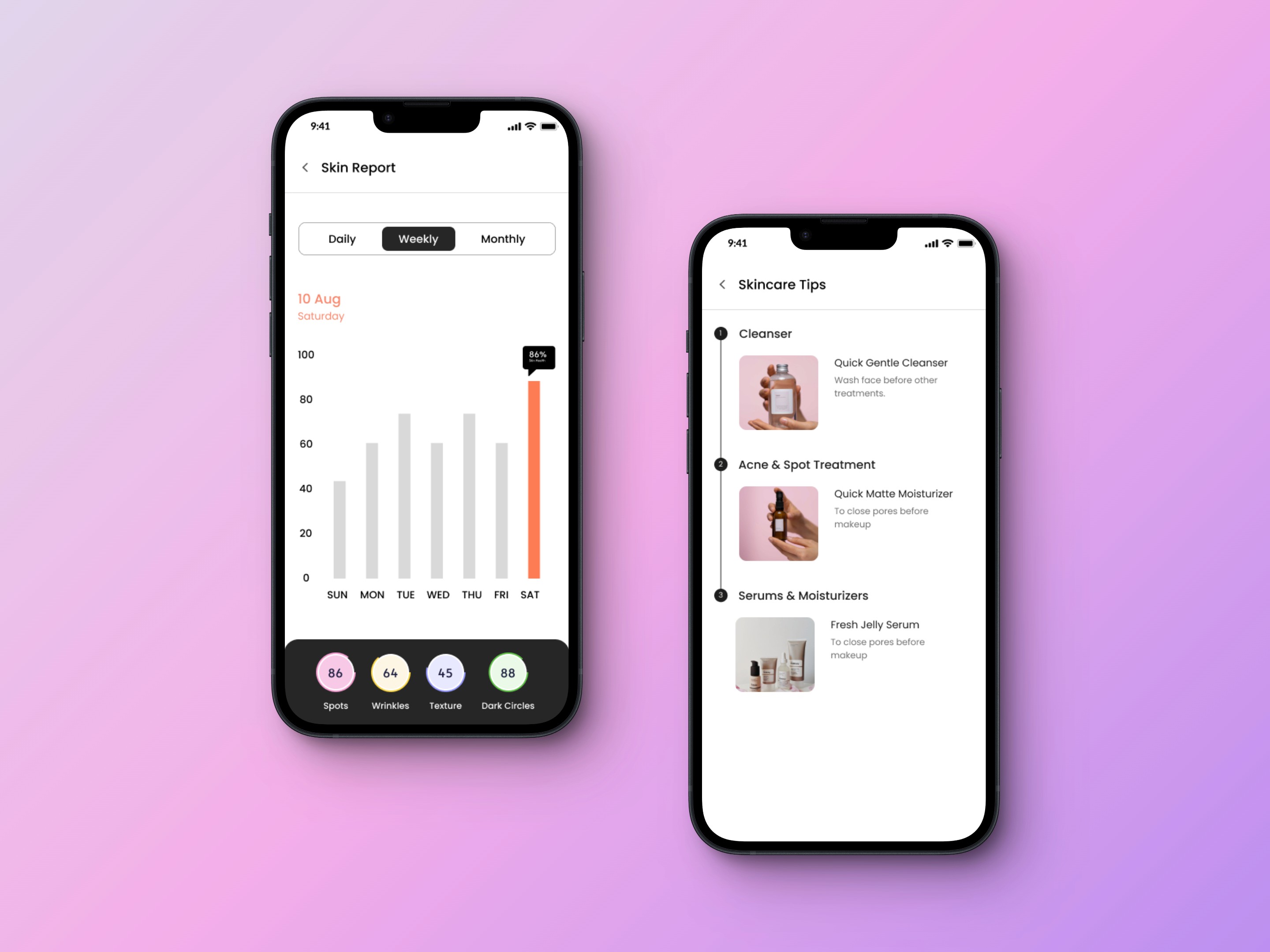
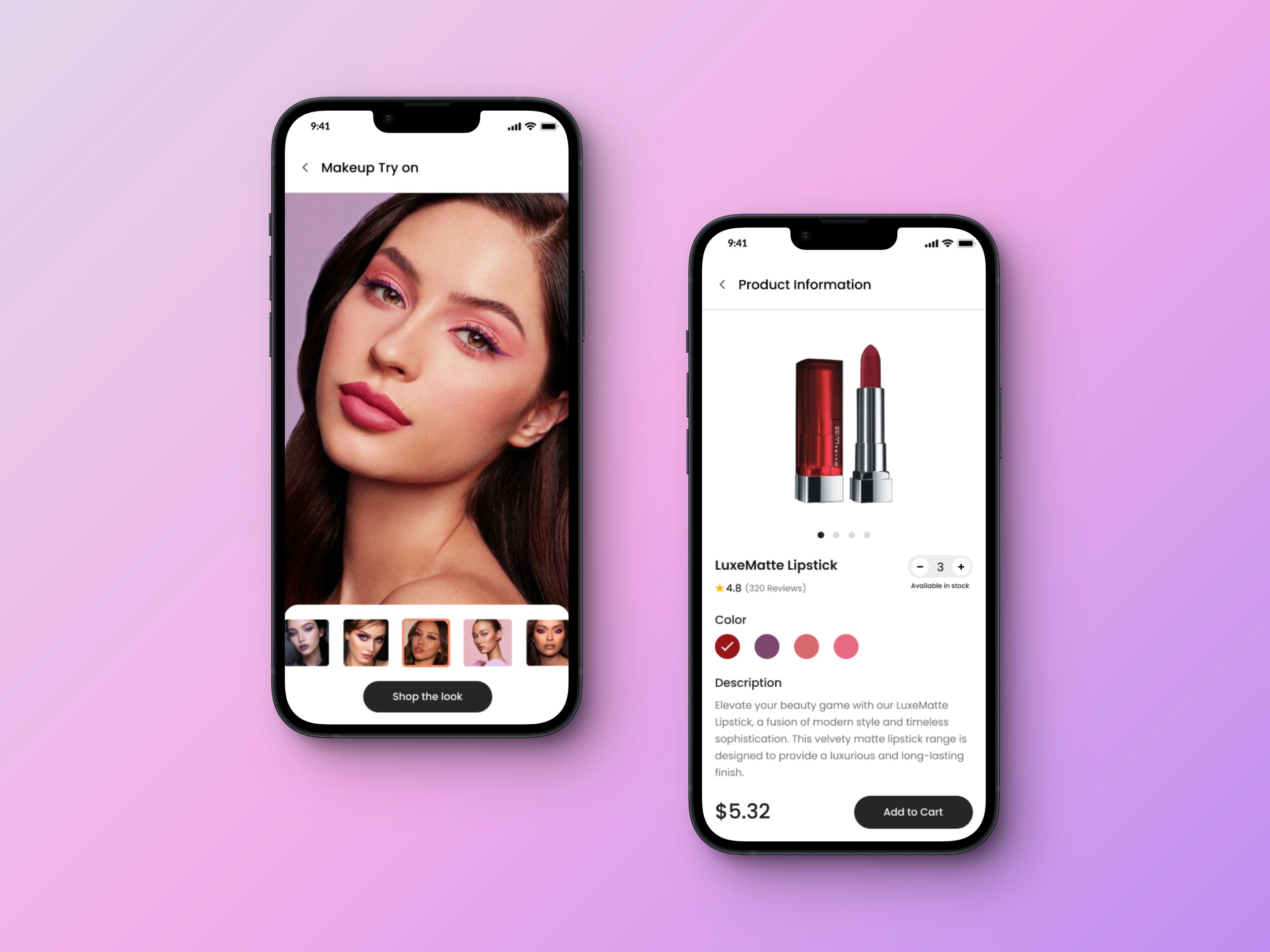
For high fidelity, I refined the design with meticulous detail, bringing the wireframes to life. Each pixel was carefully considered to create a polished and user-friendly interface, ensuring a visually appealing and functionally robust experience.
Testing and Iteration
Usability testing was conducted with a group of 10 participants, asking them to complete common tasks within the app. Based on their feedback, I made several iterations to improve the app's usability, including:
Adjusting button placements for better reachability.
Fine-tuning the skin analysis feature for accuracy and user-friendliness.
Optimizing the shopping experience based on user preferences.
Outcomes
Improved Usability
Usability testing showed a 25% decrease in task completion time and a 15% reduction in user errors after final iteration.
User feedback on the simplified navigation was overwhelmingly positive.
Enhanced Personalization
The new onboarding process allowed for better user profiling, resulting in more accurate product recommendations.
Users reported a 30% increase in satisfaction with their personalized skincare routines.
Conclusion
In summary, the key takeaway is to remain adaptable and user-centric throughout the design journey, prioritizing the end user's needs and continuously iterating until a successful solution is achieved.
Ultimately, the focus should always be on addressing the user's pain points. Acknowledging mistakes and embracing a culture of continuous improvement is essential. Sometimes, practical constraints may necessitate deviating from the ideal design process, but it's vital to strive for the best possible user experience within those limitations.
From this project , I've gained valuable insights into the non-linear nature of the design process. Continuous user involvement is crucial for gaining a deeper understanding of the problem and finding optimal solutions. It's a reminder to remain open to iterative design, free from any kind of bias.
iOS & Android
SkanCare App
My Role
UX Lead - Interaction Design
Visual Design, User Flows, Prototyping
Project Duration
Sept 2022 - Feb 2023
Overview
SkanCare is a revolutionary application that redefines the skincare experience for individuals passionate about skincare and beauty. It offers personalized skincare routines, trustworthy product recommendations, and a seamless shopping experience.
The Consumer Dilemma: Navigating Skincare and Makeup
In the world of skincare and makeup, a growing issue had emerged.
The struggle to find products that truly addressed specific skin concerns, coupled with the overwhelming influx of often contradictory information, had become a major source of frustration.
Furthermore, misleading marketing and opaque ingredient lists left consumers feeling uncertain about their beauty product choices.
Add to this the inefficient, time-consuming nature of skincare and makeup shopping, and the scope of the problem became evident.
Understanding the User
An in-Depth research was conducted to understand user behavior, goals, and pain points. Following two methods were utilized considering the time constraints:
Surveys
Provided quantitative feedback from a large sample of our target audience, enabling data-driven analysis.
Interviews
Offered qualitative feedback, allowing us to ask open-ended questions to gain deeper insights into user behavior and needs.
Key Findings:
Users prioritize natural and sustainable skincare for sensitive skin.
In-store advice and friend recommendations are trusted for product discovery.
Makeup shade selection is challenging for some users.
Online shopping concerns include product authenticity and quality.
Overall, users expressed a strong interest in a skincare app offering personalized routines, budget-friendly options, local alternatives, in-app purchases, and skin analysis.
Pain Points
Lack of Trust
Users expressed concerns about trusting skincare and makeup products due to adverse reactions and counterfeit items.
Inefficient Shopping
Users struggled to find genuine products and local alternatives, leading to a time-consuming shopping experience.
Information Overload
Users felt overwhelmed by the abundance of skincare information online.
Product Selection Difficulty
Users found it challenging to find products suitable for their specific skin concerns.
Personas
By creating user personas informed by extensive research, I honed in on key user needs, guiding our design process to deliver a simple and intuitive experience tailored to our audience.
Storyboarding
Storyboarding provided a visual narrative, mapping out the user journey in simple frames. This visual roadmap became instrumental in shaping our UX design decisions, ensuring a seamless and user-friendly experience throughout.
Wireframing
Wireframing translated the conceptual ideas into tangible structures, laying the foundation for the user interface. These skeletal representations helped define the layout and functionality, guiding the design process toward a clear and intuitive user experience.
High Fidelity
For high fidelity, I refined the design with meticulous detail, bringing the wireframes to life. Each pixel was carefully considered to create a polished and user-friendly interface, ensuring a visually appealing and functionally robust experience.
Testing and Iteration
Usability testing was conducted with a group of 10 participants, asking them to complete common tasks within the app. Based on their feedback, I made several iterations to improve the app's usability, including:
Adjusting button placements for better reachability.
Fine-tuning the skin analysis feature for accuracy and user-friendliness.
Optimizing the shopping experience based on user preferences.
Outcomes
Improved Usability
Usability testing showed a 25% decrease in task completion time and a 15% reduction in user errors after final iteration.
User feedback on the simplified navigation was overwhelmingly positive.
Enhanced Personalization
The new onboarding process allowed for better user profiling, resulting in more accurate product recommendations.
Users reported a 30% increase in satisfaction with their personalized skincare routines.
What I learned
From this project , I've gained valuable insights into the non-linear nature of the design process. Continuous user involvement is crucial for gaining a deeper understanding of the problem and finding optimal solutions. It's a reminder to remain open to iterative design, free from any kind of bias.
In summary, the key takeaway is to remain adaptable and user-centric throughout the design journey, prioritizing the end user's needs and continuously iterating until a successful solution is achieved.
Ultimately, the focus should always be on addressing the user's pain points. Acknowledging mistakes and embracing a culture of continuous improvement is essential. Sometimes, practical constraints may necessitate deviating from the ideal design process, but it's vital to strive for the best possible user experience within those limitations.
iOS & Android
SkanCare App
My Role
UX Lead - Interaction Design
Visual Design, User Flows, Prototyping
Project Duration
Sept 2022 - Feb 2023
Overview
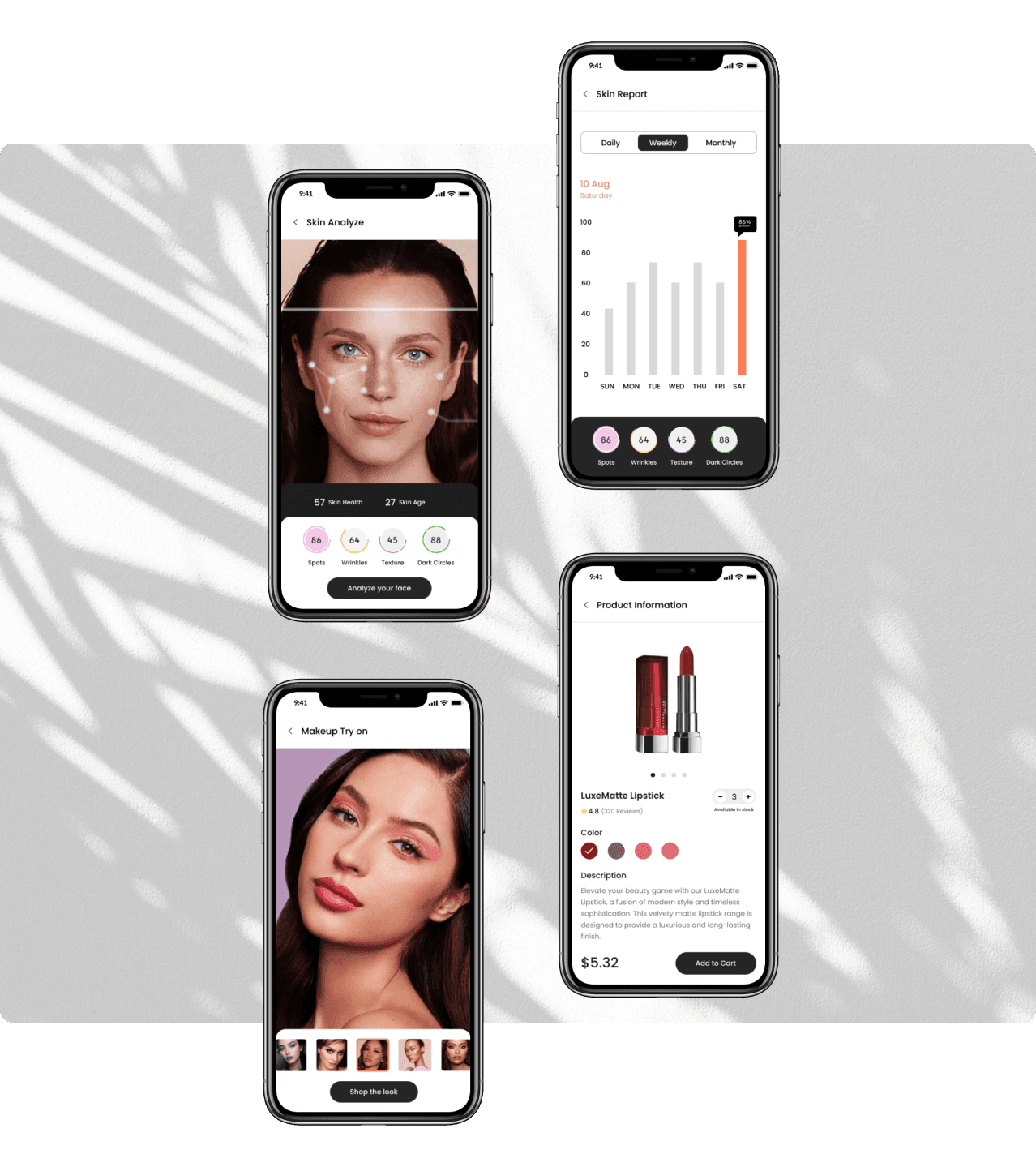
SkanCare is a revolutionary application that redefines the skincare experience for individuals passionate about skincare and beauty. It offers personalized skincare routines, trustworthy product recommendations, and a seamless shopping experience.
The Consumer Dilemma
In the world of skincare and makeup, a growing issue had emerged.
The struggle to find products that truly addressed specific skin concerns, coupled with the overwhelming influx of often contradictory information, had become a major source of frustration.
Furthermore, misleading marketing and opaque ingredient lists left consumers feeling uncertain about their beauty product choices.
Add to this the inefficient, time-consuming nature of skincare and makeup shopping, and the scope of the problem became evident.
Understanding the User
An in-Depth research was conducted to understand user behavior, goals, and pain points. Following two methods were utilized considering the time constraints:
Surveys
Provided quantitative feedback from a large sample of our target audience, enabling data-driven analysis.
Interviews
Offered qualitative feedback, allowing us to ask open-ended questions to gain deeper insights into user behavior and needs.
Key Findings:
Users prioritize natural and sustainable skincare for sensitive skin.
In-store advice and friend recommendations are trusted for product discovery.
Makeup shade selection is challenging for some users.
Online shopping concerns include product authenticity and quality.
Overall, users expressed a strong interest in a skincare app offering personalized routines, budget-friendly options, local alternatives, in-app purchases, and skin analysis.
Pain Points
Lack of Trust
Users expressed concerns about trusting skincare and makeup products due to adverse reactions and counterfeit items.
Inefficient Shopping
Users struggled to find genuine products and local alternatives, leading to a time-consuming shopping experience.
Information Overload
Users felt overwhelmed by the abundance of skincare information online.
Product Selection Difficulty
Users found it challenging to find products suitable for their specific skin concerns.
Personas
By creating user personas informed by extensive research, I honed in on key user needs, guiding our design process to deliver a simple and intuitive experience tailored to our audience.
Storyboarding
Storyboarding provided a visual narrative, mapping out the user journey in simple frames. This visual roadmap became instrumental in shaping our UX design decisions, ensuring a seamless and user-friendly experience throughout.
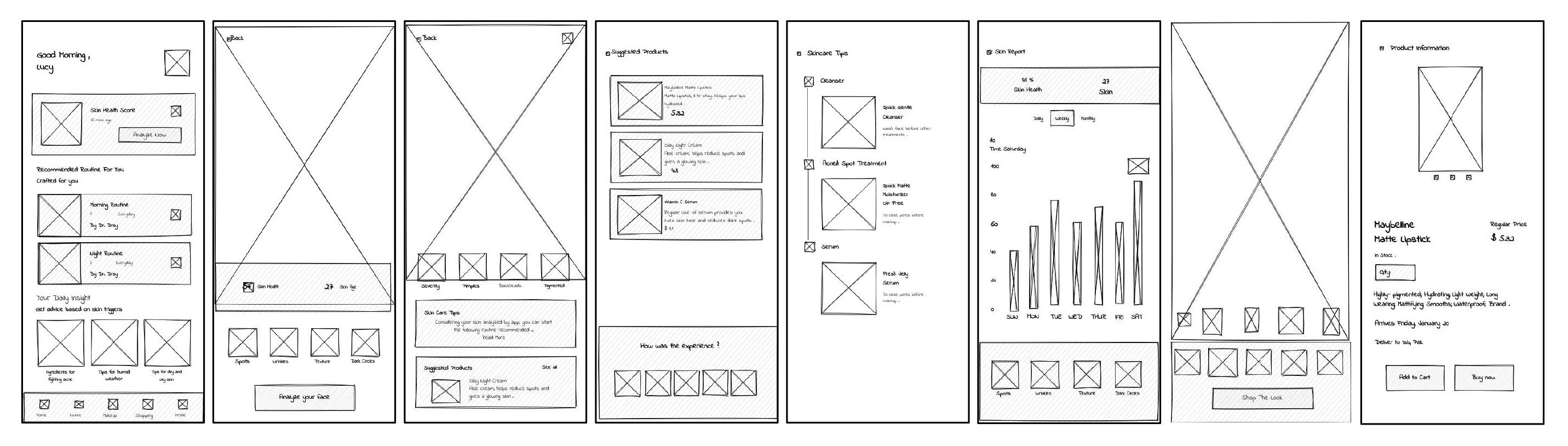
Wireframes
Wireframing translated the conceptual ideas into tangible structures, laying the foundation for the user interface. These skeletal representations helped define the layout and functionality, guiding the design process toward a clear and intuitive user experience.
High Fidelity
For high fidelity, I refined the design with meticulous detail, bringing the wireframes to life. Each pixel was carefully considered to create a polished and user-friendly interface, ensuring a visually appealing and functionally robust experience.
Testing and Iteration
Usability testing was conducted with a group of 10 participants, asking them to complete common tasks within the app. Based on their feedback, I made several iterations to improve the app's usability, including:
Adjusting button placements for better reachability.
Fine-tuning the skin analysis feature for accuracy and user-friendliness.
Optimizing the shopping experience based on user preferences.
Outcomes
Improved Usability
Usability testing showed a 25% decrease in task completion time and a 15% reduction in user errors after final iteration.
User feedback on the simplified navigation was overwhelmingly positive.
Enhanced Personalization
The new onboarding process allowed for better user profiling, resulting in more accurate product recommendations.
Users reported a 30% increase in satisfaction with their personalized skincare routines.
What I learned
From this project , I've gained valuable insights into the non-linear nature of the design process. Continuous user involvement is crucial for gaining a deeper understanding of the problem and finding optimal solutions. It's a reminder to remain open to iterative design, free from any kind of bias.
In summary, the key takeaway is to remain adaptable and user-centric throughout the design journey, prioritizing the end user's needs and continuously iterating until a successful solution is achieved.
Ultimately, the focus should always be on addressing the user's pain points. Acknowledging mistakes and embracing a culture of continuous improvement is essential. Sometimes, practical constraints may necessitate deviating from the ideal design process, but it's vital to strive for the best possible user experience within those limitations.